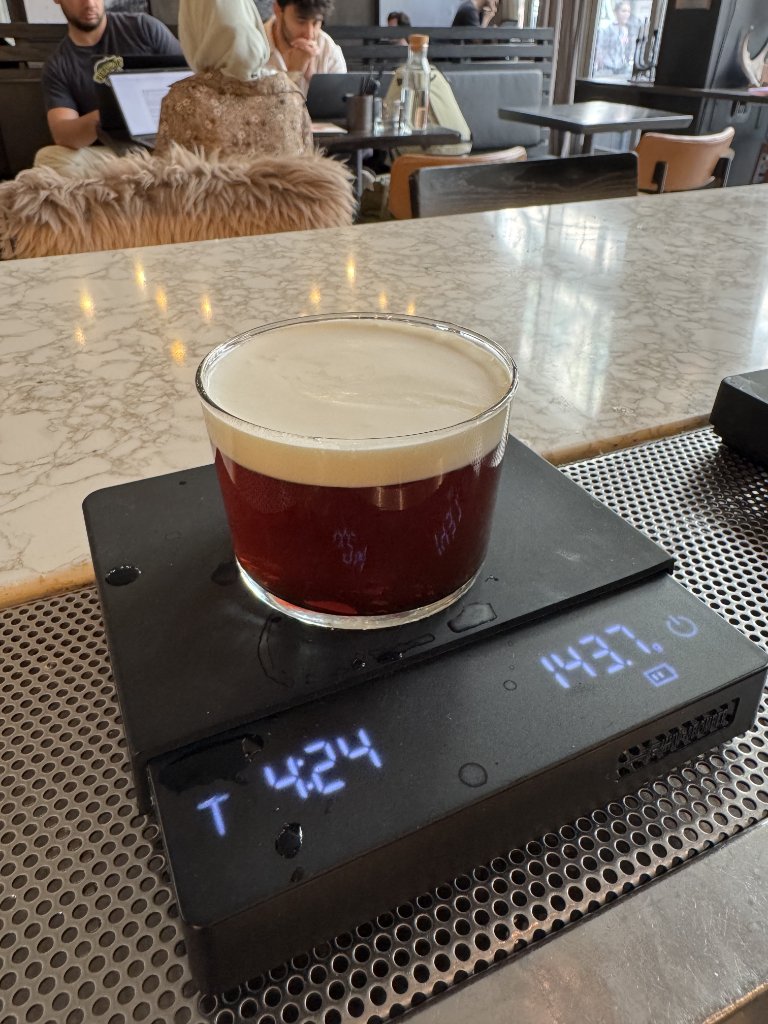
Espresso Martini Shots: When Bad Is Useful
Great espresso martinis aren't about pulling café-perfect shots. They're about understanding extraction and dilution, and why that sharp, acidic espresso you just pulled might be exactly what you need.

TL;DR: A lot of beginner espresso mistakes actually work in your favor for espresso martinis. Sharp, fast shots that taste too acidic on their own often balance beautifully once diluted. You don't need to be a coffee expert to make great coffee cocktails. You just need to understand that shaking finishes the drink, not the espresso machine.
Let's start with this: if your espresso tastes intense, sharp, or a little too acidic on its own, that's not a failure. Not for espresso martinis, anyway.
Espresso martinis are finished through dilution, after the shot is pulled. The espresso you pull is just one component: vodka, sugar, and meltwater from shaking complete the drink. What tastes harsh at 100% strength becomes balanced and expressive at 40-50% strength once it hits the glass.
This is actually great news for anyone working behind a bar. You don't need a $10,000 grinder and championship-level espresso skills to make incredible coffee cocktails. You just need to understand how extraction and dilution work together.
Espresso in Cocktails is Not Espresso in Cups
Café espresso is meant to be consumed as-is, so it needs to taste balanced on its own. Too much extraction creates harsh bitterness. Too little creates sour, thin flavors. The goal is a sweet spot: developed, complex, smooth.
Espresso for cocktails works differently. It's getting diluted by 40-60%, depending on the recipe and shake. That means a shot that tastes aggressively bright or punchy on its own can taste perfectly balanced once vodka, sugar, and meltwater are added.
In fact, slightly under-extracted espresso often works better in espresso martinis than perfectly extracted café espresso. Why? Because dilution smooths acidity and highlights sweetness. If your espresso already tastes smooth and sweet before it hits the shaker, it can taste flat or boring once it's diluted.
Common "Mistakes" That Actually Help
1. Fast Shots
Shots that pull too quickly are usually considered bad in café espresso. They taste sour, thin, and under-developed.
But in an espresso martini? That brightness becomes lift. That acidity adds vibrancy. Once you add vodka and sugar, it doesn't taste sour. It tastes lively.
2. High Acidity
Acidic espresso can be jarring on its own. But in a cocktail, acidity provides structure and balance. It keeps the drink from tasting flat or syrupy.
If your espresso tastes too sharp straight, that's fine. It's getting softened and sweetened.
3. Lighter Body
Thin-bodied espresso usually means under-extraction in a café context. But in cocktails, lighter body means the drink stays refreshing instead of heavy.
You don't need thick, syrupy espresso for a martini. You need concentrated flavor that can stand up to dilution.
What Actually Matters
1. Intensity
Your espresso needs to be strong enough to survive dilution. If it tastes weak or watery on its own, it'll disappear in the cocktail.
But if it tastes intense, even if it's sharp or bright, it'll carry through beautifully once balanced.
2. Freshness
Stale coffee creates papery, cardboard-like flavors that dilution can't fix. Fresh beans are non-negotiable.
3. Consistency
You don't need perfect shots. You need repeatable shots. If your espresso tastes the same way every time, you can build a recipe around it.
The Real Skill: Understanding Dilution
The espresso martini is finished in the shaker, not at the espresso machine. The shake adds meltwater, integrates the ingredients, and aerates the drink. That's where the final balance happens.
If your espresso is too bright, shake longer to add more dilution. If it's too heavy, use less simple syrup or adjust the vodka ratio. The drink builds itself around the espresso you're working with.
This is why bartenders who barely know espresso can still make killer espresso martinis. They're not trying to pull the perfect café shot. They're pulling consistent, intense espresso and letting the cocktail technique do the rest.
When Espresso Actually is Bad
Some flavors can't be fixed by dilution:
- Burnt, ashy bitterness: roast defects or over-roasted beans. Switch coffee.
- Papery, woody notes: stale beans or dirty equipment. Use fresh coffee and clean your machine.
- Sourness that doesn't balance: if it still tastes aggressively sour even after shaking, you may need to adjust your grind or dose.
But most of the time? If your espresso tastes strong, punchy, and a little intense, you're in great shape.
The Takeaway
Stop trying to pull café-quality espresso for cocktails. Focus on intensity, freshness, and consistency. If your espresso tastes sharp or bright on its own, that's not a problem. It's a feature.
Shaking finishes the drink. Dilution balances the flavors. Your job at the espresso machine is just to create something strong enough to survive the process.
And if you're still worried your shots aren't good enough? Make a drink, taste it, and adjust. The cocktail will tell you what it needs.
That's the whole point. Espresso martinis are forgiving. They just need you to stop overthinking the espresso and start thinking about the drink.