Brewed to Order: The Science of the Perfect Irish Coffee
The Dead Rabbit is the king of Irish coffee, at least at volume. But what if you had time? A deep dive into fresh brewing, the tools that make it possible, and when brewed to order actually makes sense.
Brewed to Order: The Science of the Perfect Irish Coffee
Coffee nerds on the internet call it soup. That is weird. That is fun. It gets even more fun when you add whiskey. That is the door into this conversation.
The Dead Rabbit Is the King
The Dead Rabbit in New York City holds the crown on Irish coffee. They were named Best Bar in the World at the 50 Best Bars ceremony in 2015. Their Irish coffee is the reason people book flights to Lower Manhattan. Give them full credit. Do not qualify this or hedge it.
What made them the king is not just the recipe. It is the system they built. Two specific innovations changed everything.
First, the sous vide hot water bath. The Dead Rabbit keeps their coffee and Demerara sugar mix in polycarbonate containers held at 176 degrees Fahrenheit using a water bath. This is precise enough to keep the coffee hot and ready to serve without cooking off the volatile aromatic compounds that heat destroys. Dead Rabbit's own blog states that putting the coffee and sugar directly in the sous vide itself burned the coffee, which is why they moved to the container in water bath method. This solved the problem of keeping a high volume Irish coffee program consistent across a full service.
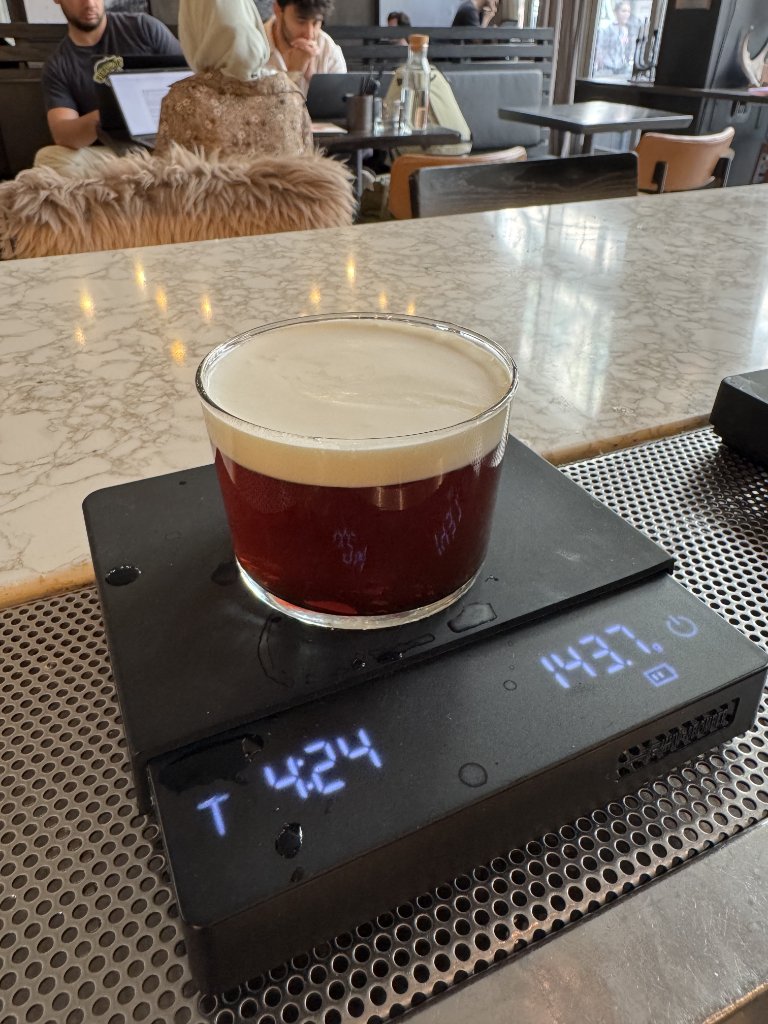
Second, the protein shaker for cream. This came from Jack McGarry and Sean Muldoon, the bar's founders. Sean's wife Anne discovered that a protein shaker worked brilliantly at home. The method: use heavy cream at 35 to 38 percent fat. Half fill the shaker. Shake until the bubbles disappear and the texture is silky and pourable, not thick. The finished cream should look like the head on a freshly poured pint of Guinness. No hand whisking, no mess, no inconsistency. Scales to any volume.
The Dead Rabbit spec: 1 oz Bushmills Original Irish Whiskey, 5/8 oz rich 2:1 Demerara syrup, 3.5 oz freshly made coffee (their Sumatra Mandheling blend, described by them as a slightly fruity medium roast), freshly whipped heavy cream on top, optional grated nutmeg. Dead Rabbit themselves state to use freshly made coffee and specifically warn against letting it sit on a hot plate because it will taste burnt and bitter.
This is a system, not just a recipe. They solved the operational problem. That is why they are the king.
But What If You Have Time?
If you are running a split concept bar and cafe, or a lower volume program where Irish coffees come in ones and twos rather than waves, you have something the Dead Rabbit's volume machine does not always have: time. Time means you can brew to order. The question is whether that is worth it, and what you are actually signing up for.
The Science of Fresh Coffee
Roasting traps CO2 inside the bean as a byproduct of the Maillard reaction and caramelization. CO2 is hydrophobic, meaning it physically repels water. When you brew coffee with too much trapped gas still inside, CO2 creates pockets in the grounds that water cannot fully penetrate. The result is uneven extraction: some grounds get hit hard and over extract, others barely get touched and under extract. The cup tastes muddy and confused because it is muddy and confused at the particle level.
The bloom is the solution. When hot water first hits fresh coffee grounds, CO2 escapes in a visible bubbling dome. This is not decorative. It is the gate. You have to let it open before even extraction can begin. Skipping the bloom or rushing it means brewing into a bed that still has gas in it.
The timing matters. Beans 1 to 3 days off roast still have too much CO2 and the bloom is violent and uncontrollable, making even saturation nearly impossible. At the other end, stale coffee has lost the volatile aromatic compounds that make interesting coffee interesting. The sweet spot is roughly 4 to 14 days post roast. Light roasts need more rest than dark roasts because they are denser and release CO2 more slowly.
Light and terroir driven coffees are particularly fragile. Fruit acids, florals, and delicate aromatics are the first casualties of heat and time. This is why the Dead Rabbit's sous vide bath is the correct answer at volume. It holds the coffee at 176 degrees Fahrenheit, warm enough to serve but not hot enough to accelerate the destruction of those compounds the way a conventional hot plate does. A hot plate sitting under a glass carafe is slowly ruining the coffee. It is not keeping it fresh. It is cooking it.
Bartenders do not pre-squeeze citrus juice three days in advance and then heat it on a plate and call it fresh. Coffee is an ingredient. Treat it like one.
Brew Temperature as a Variable
The SCA standard brew temperature range is 195 to 205 degrees Fahrenheit. Within that range, different compounds extract at different rates. Acidic compounds dissolve quickly even at lower temperatures, bringing brightness and fruit notes. Sugars need slightly more heat to fully extract, producing sweetness and body. Bitter compounds including tannins and quinides are extracted more aggressively at the top of that range.
For a standard drip brew or pour over you optimize for balance across all three. But an Irish coffee is a different context. The sweetness is handled by the Demerara syrup. The cream adds body and rounds the finish. What you actually want from the coffee in this specific drink is the clarity and fruit acidity of the light roast, while limiting extraction of bitter compounds that are going to get buried under cream and whiskey anyway.
The open question: is there a lower brew temperature, somewhere in the 185 to 195 degree Fahrenheit range, that preserves more of the fruit acidity and aromatics in a light roast while limiting bitter extraction that would be masked in the final drink regardless? The science suggests this is plausible. The answer for Irish coffee specifically has not been formally tested. If you are building this program, it is worth dialing in.
The Demerara Upgrade
The Dead Rabbit uses a 2:1 rich Demerara syrup made with water. That is correct and it works. Demerara sugar retains its natural molasses content and carries trace minerals including potassium and magnesium, giving it toffee and caramel depth that plain simple syrup cannot match.
The Barabica modification: make the syrup with brewed coffee instead of water. The dissolved solids in brewed coffee carry flavor. When you dissolve Demerara into brewed coffee instead of plain water, the sweetness gains body, depth, and a direct harmonic connection to the coffee already going into the glass. You are building the syrup and the coffee into the same flavor conversation from the start.
Calibrate carefully. The syrup is doing more flavor work, so pull back slightly on volume to avoid the drink reading as over sweetened. This is not fixing something broken in the Dead Rabbit spec. It is adding one layer on top of their foundation for programs that have the bandwidth to execute it.
The Cream
The Dead Rabbit figured this out and the whole industry should copy it. Use heavy cream at 35 to 38 percent fat. Lower fat content will not float correctly and will collapse into the drink. Half fill a protein shaker. Shake until the texture is silky, pourable, and free of bubbles. The goal is the look and texture of a Guinness head: substantial, creamy, and able to sit on top of the coffee long enough for the guest to drink through it. The cream should pour, not get scooped. This scales. Prep several shakers at the top of service.
The Service Math
Brewing to order has a real time cost.
Grinding on demand takes 20 to 30 seconds. Pre heating the glass takes 30 seconds. The brew itself varies by method. Building the drink, adding whiskey, syrup, and coffee, takes about 30 seconds. Preparing cream in the protein shaker takes 30 to 45 seconds. Pouring the cream and garnishing takes about 15 seconds. Total time per drink depending on brewer: roughly 3.5 to 5.5 minutes.
At that pace, one bartender also running the rest of their bar can realistically produce 3 to 5 brewed to order Irish coffees per hour before quality drops or other guests start suffering. That is the real ceiling.
Brewing to order only makes sense when three conditions are true simultaneously: the Irish coffee is a deliberate destination order and not a casual add on; the guest has been told upfront about the wait and has said yes; and Irish coffees are not arriving in rounds of three or more at the same time.
If any of those conditions break down, batch the coffee. Keep it in a thermal vessel, not on a hot plate. Use the Dead Rabbit system. There is no shame in that. It is what the best bar in the world does.
Volume Check and the Three Brewers
Before diving into specific brewers, frame the volume question directly. The Dead Rabbit spec calls for 3.5 oz, which is 100ml of coffee. That is not a variable. Each brewer below is assessed on whether it can hit that number cleanly, ideally with a small amount left over for a quality check before the coffee goes into the glass.
OREA O1 (Baby O)
Designed for single dose brewing between 8 to 18 grams. At the low end with 8g of coffee and around 130g of water, it produces approximately 110 to 120ml. That gives you 100ml for the Irish coffee and a small taste for quality control. You have to brew intentionally small and dial your grinder for that specific dose.
Brew time: 2 to 3 minutes of active attention with a kettle in hand the entire time. This is not a hands off brew. Total drink time: approximately 4.5 to 5.5 minutes.
Why it works: produces a transcendent cup on a quiet Tuesday. Why it doesn't: at 3 deep on a Friday with the printer going it will humiliate you. It demands full attention and punishes anything less. Best for programs where the Irish coffee is a ceremony. One guest, one moment.
CAFEC Deep 27
A single cup pour over with a steep 27 degree cone angle designed for brewing between 10 to 12 grams. At 12g of coffee with 150ml of water it produces approximately 130 to 140ml. That is about 30 to 40ml over target. Not a problem. You get your 100ml for the build, a quality check sip, and a small remainder. Going below 10g undermines the entire brewing logic the dripper is engineered around.
Brew time: 2 to 2 minutes 50 seconds, and less actively demanding than the O1 since you are pouring to center and stepping back. Total drink time: approximately 4 to 5 minutes.
Why it works: sits in the middle ground between speed and attention. Why it doesn't: the narrow cone makes it genuinely difficult to load ground coffee into the center cleanly, especially single handed mid service. Worth knowing before committing.
Best for bars with a dedicated coffee prep workflow where the bartender gets occasional breathing room between orders.
OXO Rapid Brewer (the ORB)
For the soup method the standard community protocol is: paper sandwich with cut to size Chemex filters above and below the puck, add near boiling water, then immediately begin pressing the plunger with just the weight of your hand. Standard dose around 22g of coffee at roughly a 1:4 input ratio. Total active brew time from water in to cup: 45 to 90 seconds.
Volume output is approximately 60 to 70ml, short of the 100ml target. The fix is bypass: add 30 to 40ml of near boiling water directly to the glass before building the drink. This is not a workaround. Even after bypass the TDS is significantly higher than a standard pour over. You are creating an Americano style drink where concentrated extraction is topped to volume with hot water.
Total drink time with bypass: approximately 3 to 3.5 minutes. Fastest of the three.
Why it works: costs $40, fastest output, lowest operational friction. Why it doesn't: requires understanding bypass and explaining to a curious guest what they are looking at. The volume math requires an extra step.
Best for bar programs that want the fastest, lowest equipment cost single serve option and are happy to be transparent about their method.
The Glass and Temperature
The standard practice is to pre heat the Irish coffee glass with boiling water before building the drink. This is correct. A cold glass thermally shocks the coffee as it hits the sides and base, crashing aromatic compounds that should be rising to the cream layer. A properly pre heated glass keeps the build at a stable temperature through the full construction of the drink.
The open question, stated plainly and without overclaiming: how hot is hot enough, and is there a point where the glass is so hot that it drives off whiskey aromatics before the cream goes on as a lid? This has not been formally tested. Dead Rabbit's guidance says to pre heat with boiling water. That is the starting point. Whether dialing this in further for a lighter, more aromatic whiskey versus a more robust expression changes the drink is a question worth asking.
The Barabica Build
Frame this as the Dead Rabbit spec adapted for terroir driven and light roast coffees. Their foundation is not changed. A few variables are tuned so the coffee has room to lead.
Barabica Irish Coffee 1 oz Irish whiskey 3/4 oz Demerara syrup (made with brewed coffee, not water) 3.5 oz freshly brewed light roast coffee Freshly whipped heavy cream (35 to 38 percent fat) Optional: freshly grated nutmeg or cinnamon
With a medium roast Sumatra like Dead Rabbit uses, the coffee contributes body and earthy depth and the whiskey is a clean, neutral partner. With a light roast that has its own story to tell, the coffee is leading and the other components are supporting it. Do not bury the acidity. The syrup should echo the coffee, not drown it. Adjust syrup volume to taste as you dial in the program.
One idea that has not been seriously tested yet is pre loading the whiskey and Demerara syrup into the glass and brewing directly onto them rather than adding the coffee last. The operational appeal is real: it removes a step and potentially integrates the components faster and more fully. The hesitation is also real. Ethanol has a boiling point of 78 degrees Celsius. Brewed coffee comes off the device close to that temperature. Brewing hot directly onto an open glass of whiskey could volatilize some of the aromatics that make the whiskey worth choosing. How much actually flashes off in the seconds it takes to pour, and whether it matters in the context of the finished drink, is genuinely unknown. It is on the testing list. If you try it before we do, tell us what you find.
Let Flavor Lead: Spirit Selection
The Irish coffee format is a frame, not a prescription. The Dead Rabbit built their spec around a specific coffee and a specific whiskey because those two things were considered as a system. The low acidity and earthy body of their Sumatra Mandheling makes a clean Irish whiskey the obvious choice. The whole thing is calibrated together.
If you are brewing a light roast with a distinct flavor story, the honest question is whether Irish whiskey is still the right choice, or whether you are defaulting to tradition while ignoring what is actually in the glass.
Kamavindi Estate, April Coffee Roasters + Ten To One Dark Rum
The Kamavindi Estate is a 20 hectare farm in Embu County, Kenya, managed by Peter Mbature along with his mother Hellen Weveti and his sister Gladwell Wanjira. The farm was established in 1958 during British colonial rule by the late John Njiru Mbature with just 100 seedlings, the maximum allowed under restrictions that limited native Africans to 100 trees. After those restrictions were lifted in 1961, the farm expanded and now has 10,000 trees including SL28, SL34, Ruiru 11, and Batian varietals. April Coffee Roasters, the Copenhagen based specialty roastery founded by barista and roaster Patrik Rolf, has been sourcing from Kamavindi since visiting the farm in 2023. The AA lot is a mixed varietal washed process light roast with April's official flavor notes of blackberries, red apple, and florals. High acidity rated 4 out of 5 by April. Growing altitude is 1,750 meters.
Ten To One Dark Rum is a pan Caribbean blend of 8 year old Barbadian and Dominican column still rums, high ester Jamaican pot still rum, and Trinidadian rum, aged in American white oak ex bourbon casks with no added sugar, coloring, or flavoring. Ten To One's official tasting notes include baking spice, vanilla, caramel, roasted nuts, citrus, orchard fruit, and tobacco. The Jamaican pot still component specifically contributes bright fruit esters including banana peel, citrus, and orchard fruit. When that ester brightness meets the blackberry and red apple brightness of a Kenyan like Kamavindi, the two flavor systems are speaking the same language. The sugarcane base of the rum echoes the Demerara. It was a combination that made sense immediately and tasted better than it sounded.
SEY Coffee Peru + Sherry Cask Whiskey
SEY is a micro roastery based at 18 Grattan Street in Brooklyn, New York, focused on terroir driven light roasts from single producers. Their Peru coffees are sourced from high elevation farms in the Cusco region, including producers like Eudis Orosco and Isidro Orosco farming at elevations above 2,100 meters. SEY's Peru program consistently produces coffees showing delicate stone fruit, white florals, and berry bright acidity. Their own product descriptions reference notes including ripe peach, white florals, fresh blueberries, coffee blossom, raspberry jam, and apricot across their Peru roster.
A sherry cask finished whiskey, particularly one finished in oloroso casks, carries notes of dried dark fruit, raisins, figs, warm baking spice, and toffee. Whisky Advocate notes that the influence of oloroso sherry casks produces red fruit, figs, dates, and raisins in the whiskey. Those concentrated dried fruit notes build a bridge between the fresh stone fruit brightness in a Peru coffee and a longer, richer dried fruit finish that the coffee on its own would not reach. They do not fight each other. They extend each other.
The through line in both cases: the spirit was chosen because its flavor profile amplified what the coffee was already doing. The format stayed identical. The logic shifted from what belongs in an Irish coffee to what belongs with this specific coffee in this specific glass. That is the Barabica principle. Flavor leads. Format follows.
Why Would You Do This?
Coffee is cheap. Irish coffee is nominally a transaction: spirits plus coffee plus cream equals price. Brewed to order upends that equation. It takes time. It ties up a bartender. It costs more to produce. It is a worse financial move in almost every scenario.
That is the point.
Great coffee is the work of a hundred hands. A farmer who planted shade trees and built soil health. A cooperative that sorted and processed. A miller who hulled and graded. A exporter who moved it across an ocean. A importer who tasted and selected. A roaster who dialed in heat and time. A packaging team who protected it from oxygen. The bartender who brews it three minutes before you drink it.
One hundred hands, working to say something true about a specific place and a specific moment in time.
Coffee bars say they respect that work. Brewed to order Irish coffee actually respects it. It is an invitation to slow down. To taste not just the drink but the decision that went into it. To sit with the paradox that you are holding a boozy beverage made with more care than drinks ten times the price. To notice that the bartender is not rushing you. To understand that the wait is not a problem to be solved but a gift being handed across the bar.
It is a way of saying your time matters and what you are tasting matters and the work that went into both of those things matters. In a category built on speed and volume and normalized waste, that is a radical act.
That is why you would do this.
The Choice
No winner declared. No ranking. The Dead Rabbit's system is correct for high volume and has earned every award it has received. For programs with time and a guest who has opted into the wait, brewing fresh adds genuine depth worth exploring. The tools are affordable, the science is real, and the coffee you are using deserves to be treated like an ingredient. Pick the tool that fits your bar. Tell the guest how long it takes before you start. Make them want to wait.